Handing Over the Flannel: Personal Care With a Parent, Minus the Awkwardness

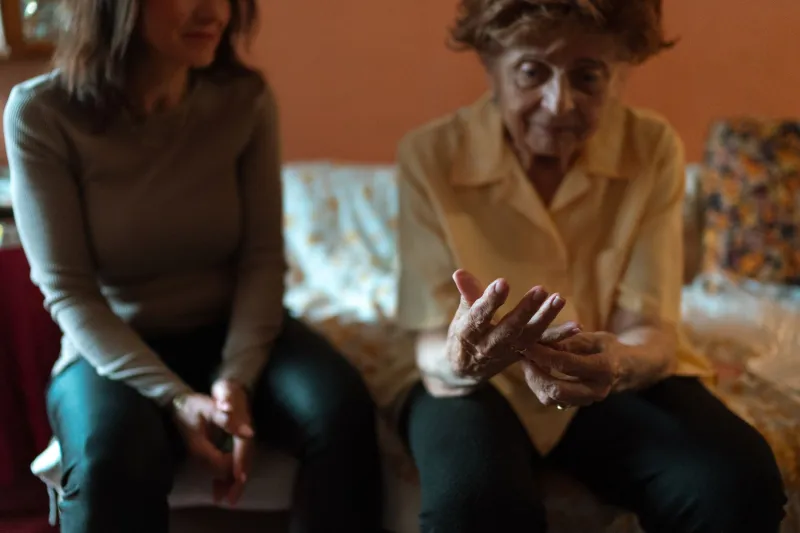
Photo: senior parent adult daughter bathroom support home care UK warm natural light, via i.pinimg.com
Nobody really plans for the bathroom-door moment. One week your mum is managing fine, thank you very much. The next, she’s holding the towel rail a bit longer than usual, or your dad is wearing the same shirt for the third day because the buttons have become a small war. You want to help. They want to pretend you haven’t noticed. And suddenly the landing feels very small indeed.
Personal care is often the part of family caring that people dread most. Not because it’s difficult in the practical sense — though it can be — but because it lands right in the middle of a relationship that has spent decades being the other way round. You were the one who needed help with the flannel. Now, possibly, it’s them.
That shift can be tender, funny, prickly and sad, sometimes all before breakfast. The good news is that dignity doesn’t require a perfect script. It mostly requires noticing, asking and not making a performance out of it.
The awkwardness is not a warning sign
It’s tempting to read a parent’s embarrassment as proof that you’ve overstepped. Usually it’s just proof that they’re human. Most of us would rather not have our adult children help us wash, and most adult children would rather not be doing it either. That doesn’t mean the help is wrong. It means the moment needs handling with a bit of care.
Try not to rush in with a speech about how you ‘don’t mind’. They know you don’t mind. What they need to hear is that they still get a say. Dignity in personal care is less about grand declarations and more about small mercies: a closed door, a towel within reach, a choice about which sleeve goes first.
Start smaller than you think
You don’t have to begin with the most intimate task. Start with the bits around the edges. Help with socks. Sit on the bed and chat while they do the rest. Set out the things they need so they don’t have to bend or reach. Put the toothpaste on the brush if that’s useful, then leave the room.
Sometimes the easiest way in is through ordinary grooming: a hairbrush, a clean shirt, a bit of hand cream. These are low-stakes moments that build a new kind of rhythm. You are not announcing a new era of care. You are just making the morning a bit less of a slog.
If your parent can still manage some parts, let them. ‘Hands-off where possible, hands-on where necessary’ is a decent rule of thumb. Set up the room, then step back. Come in when asked. Leave when asked. The goal is not efficiency. The goal is a person who still feels like a person, not a task on a rota.
Words that make it easier
You don’t need a script, but a few reliable phrases help. Keep them adult, plain and free of baby talk. Something like:
‘I’m going to pass you the flannel and then I’ll look out of the window for a minute. Give me a shout when you’re ready.’
‘Would you rather I wait outside while you do that bit?’
‘I’ll put your clean top on the bed. You choose which one you want.’
‘I’m just going to help with your back, then I’ll leave you to the rest. Is that all right?’
Notice what these do. They explain what’s happening, they ask permission, and they leave an exit. They also avoid the dreaded ‘let’s get you sorted out’, which sounds like a parcel being processed.
And if you get it wrong — if you rush, or say something clumsy — repair it. ‘Sorry, I barged in there. I’ll knock next time.’ A small repair goes a long way. It tells them you’re still paying attention.
Choice is the real dignity
Feeling dignified is less about being covered up and more about being in charge of something. So offer choices, even tiny ones. Which order would you like to do things? Door open a crack or closed? Towel or dressing gown? Radio on or off? Would you rather I help, or would you rather wait for the carer?
If a paid carer is coming in, ask your parent what they’d prefer. Some people would rather have a female carer for personal care. Some would rather have a stranger than their daughter. That’s not a rejection. It’s a preference, and it’s allowed. Good home care agencies will listen and try to keep the same person where possible, because familiar hands make a difference.
Make the room feel less like a clinic
Small environmental tweaks can shift the whole mood. A warm towel on the radiator. A non-slip mat that actually stays put. Good light that isn’t harsh overhead glare. A chair or perching stool if standing is wobbly. A shelf for the things they use most, so nobody is rummaging in a cupboard while trying to keep their balance.
If you’re thinking about equipment — a bath board, a grab rail, a raised toilet seat — ask for an occupational therapy assessment through your council or GP rather than buying randomly online. In the UK, that route can save you money and arguments. The right kit, fitted properly, is not a sign of decline. It’s just a sensible pair of hands.
The half-step-back rule
It’s easy to start doing everything because it’s quicker. Try not to. Let your parent keep whatever they can keep. If they can wash their face, let them. If they can choose their clothes, let them. If they can dry themselves, hand them the towel and turn away.
This isn’t about making your life harder. It’s about protecting the bits of self that personal care can quietly erode. The more they do, the more they remain the person they were before the bathroom became complicated.
After the awkward moment
Don’t over-apologise. Don’t make a big emotional speech at the sink. Just carry on with something ordinary. ‘Right, what’s on telly later?’ or ‘I’ll put the kettle on.’ The ordinary is soothing. It says: that was just a moment, not a new identity.
Humour helps too, as long as it’s kind and shared. A wry comment about the indignity of socks can do more for the atmosphere than a solemn lecture about dignity. Read the room, though. If they’re not laughing, don’t push it.
A simple morning rhythm
If you’re building a routine, keep it boring in the best way. Knock and wait. Set out what’s needed. Explain what you’re doing. Ask before each step. Step out when you can. Warm towel. Clean clothes within reach. Tea afterwards. Same order most days, so nobody has to negotiate from scratch while half awake.
Personal care will never be anyone’s favourite part of family life. But it doesn’t have to be the moment the relationship goes cold. With a bit of warning, a bit of choice and a lot of ordinary chatter, it can become just another part of the day — handled with warmth, and with the door held at whatever angle feels right.